Delivering DNA into the nucleus remains one of the biggest bottlenecks in non-viral gene therapy. Unlike mRNA, DNA has to cross the nuclear barrier before it can be transcribed, and that step is especially difficult in cells that are not actively dividing. A new study describes a peptide-based strategy designed to make that journey more efficient.
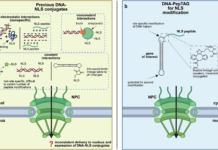
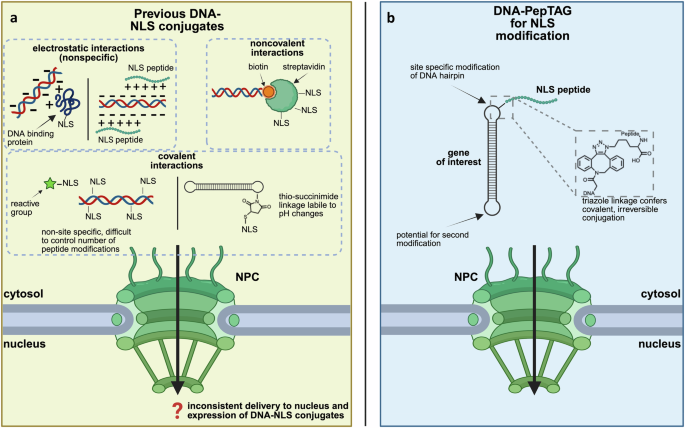
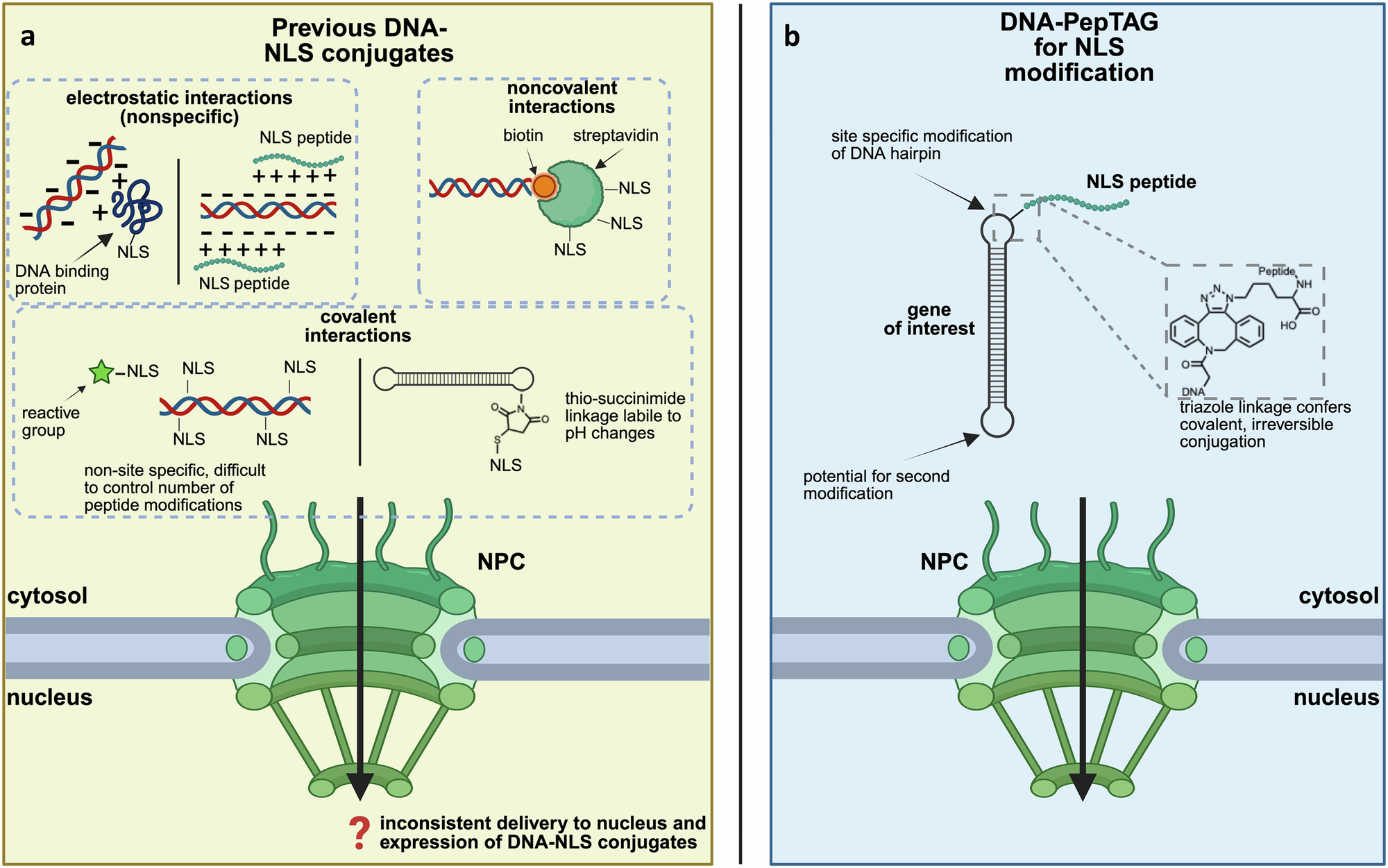
The researchers built a modular workflow for creating DNA-peptide conjugates using an enzyme-driven tagging approach. Their platform produces peptide-modified DNA gene cassettes, referred to as DNA-PepTAG, by attaching nuclear localization signal (NLS) peptides to linear DNA. The goal is to improve how effectively DNA cargo reaches the nucleus after delivery.
In growth-arrested cells, gene cassettes carrying NLS peptides showed stronger nuclear localization, higher mRNA output, and greater reporter expression than unmodified DNA. In tests using an eGFP reporter delivered by lipofection, expression increased by up to about 10-fold in some conditions.
The team also screened several different NLS sequences across multiple human cell lines and found that the best-performing peptide could depend on the cell type. Two NLS peptides, PLSCR-1 and extSV40, stood out for producing consistently strong results across the models tested, suggesting they may be useful starting points for broader applications.
Importantly, the approach was not limited to a single payload size or protein class. The system was used to deliver gene cassettes encoding both cytosolic and secreted proteins, and it was tested across DNA constructs ranging from 1.3 kbp to 7 kbp. That range suggests the method may be adaptable to a variety of therapeutic or research applications.
Why does this matter? Many current DNA delivery methods rely on high doses to overcome poor nuclear entry, which can increase toxicity and complicate translation. If peptide-guided nuclear delivery can improve expression with less DNA, it could make non-viral gene delivery more practical for future therapies.
As with many delivery technologies, the details matter. The study reinforces that the identity of the peptide, the way it is attached, and the cell context all influence performance. Still, the new conjugation workflow offers a more controlled route to DNA-NLS engineering and may help address a long-standing obstacle in DNA therapeutics.
Overall, the work points to peptide-tagged DNA as a promising platform for boosting nuclear delivery in non-dividing cells, with potential relevance for gene therapy and other DNA-based applications.