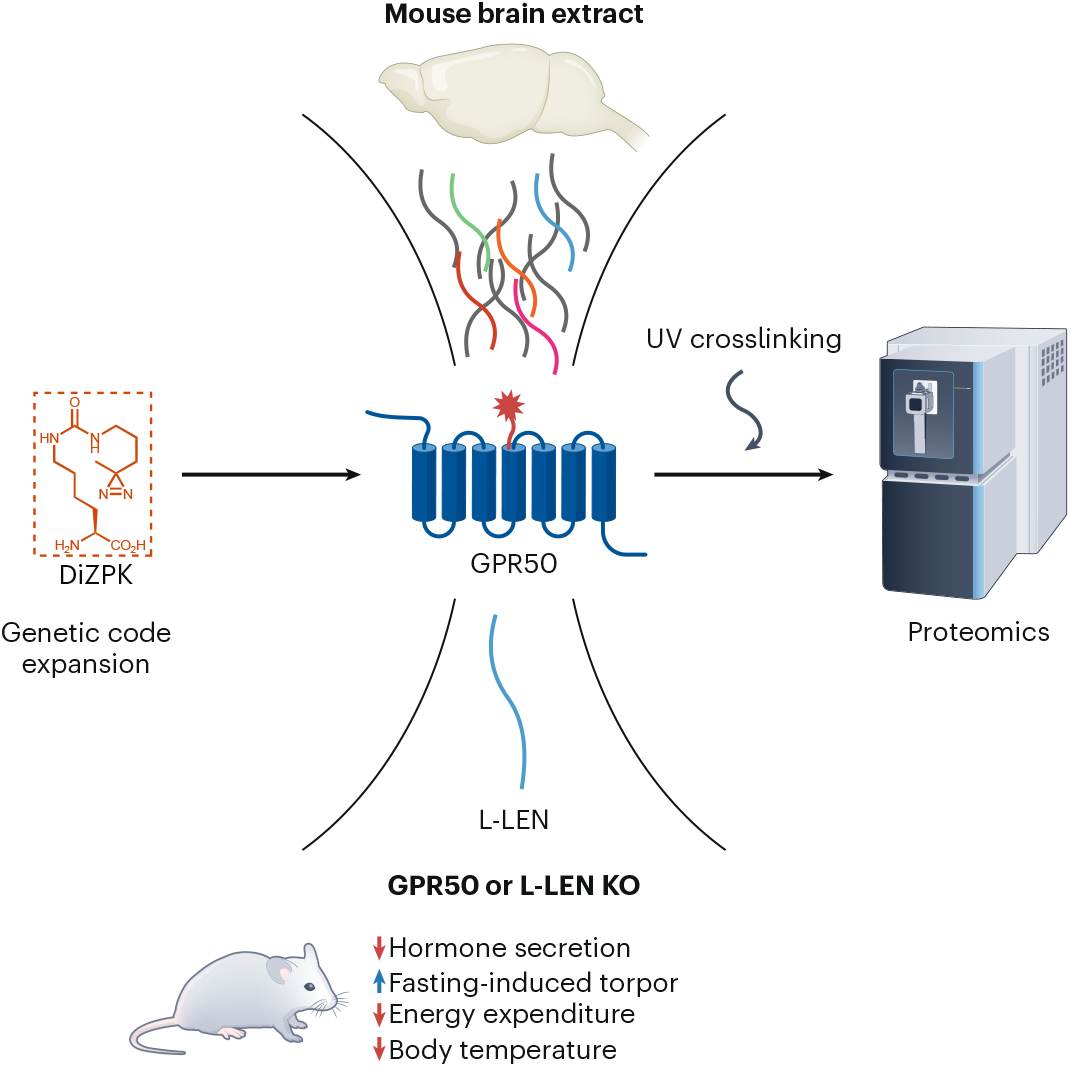
Orphan G protein-coupled receptors remain some of the most elusive drug targets in biology because their natural ligands are often unknown. A new approach reported in Nature Chemical Biology uses site-specific UV-mediated crosslinking to help solve that problem, providing a way to capture receptor–peptide interactions that can be difficult to detect with conventional screening.
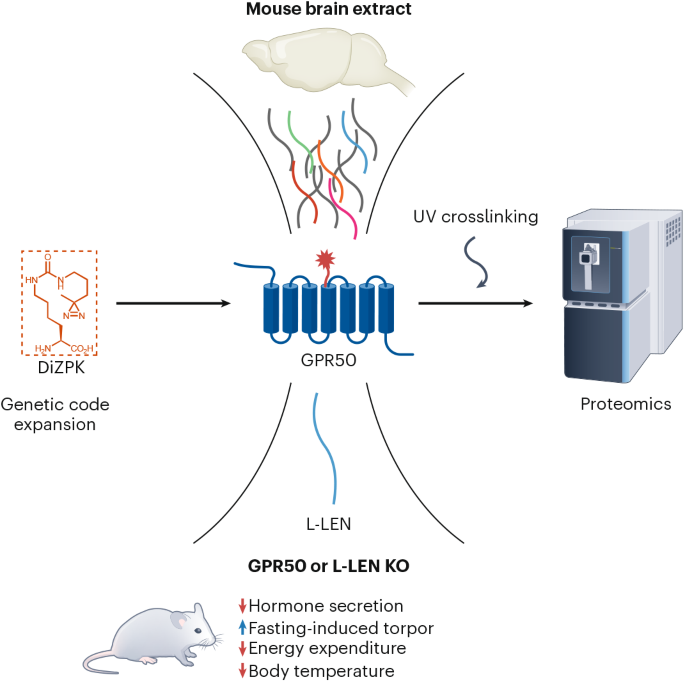
Using this strategy, the researchers identified Little-LEN, a neuropeptide, as an agonist for GPR50. That finding is notable not only because it assigns a ligand to a previously orphan receptor, but also because it connects the pair to regulation of energy expenditure in response to metabolic state.
The basic idea is elegant: introduce a light-activated crosslinking handle at a defined position so that, when the right ligand binds, the interaction can be trapped and analyzed. This kind of method could be especially useful for peptide ligands, which often act through transient, selective contacts and may be missed by broader discovery workflows.
For peptide science, the result highlights two important themes. First, many endogenous signaling peptides likely still have undiscovered receptor partners. Second, chemical biology tools that preserve native-like binding while adding a controllable capture step can accelerate receptor deorphanization. In the long run, that could improve our understanding of neuroendocrine signaling and point to new therapeutic opportunities in metabolic regulation.
GPR50 now joins the growing list of orphan receptors with clearer biological context, and Little-LEN adds another example of how peptide ligands can illuminate previously hidden signaling pathways.