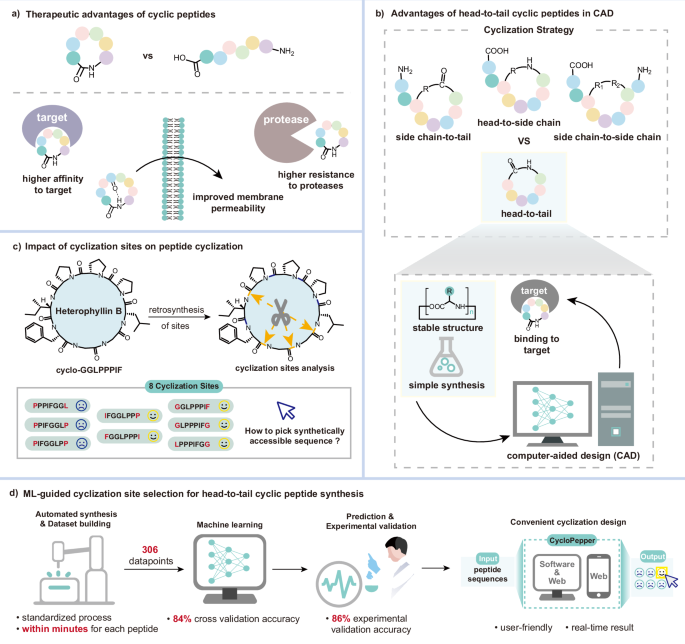
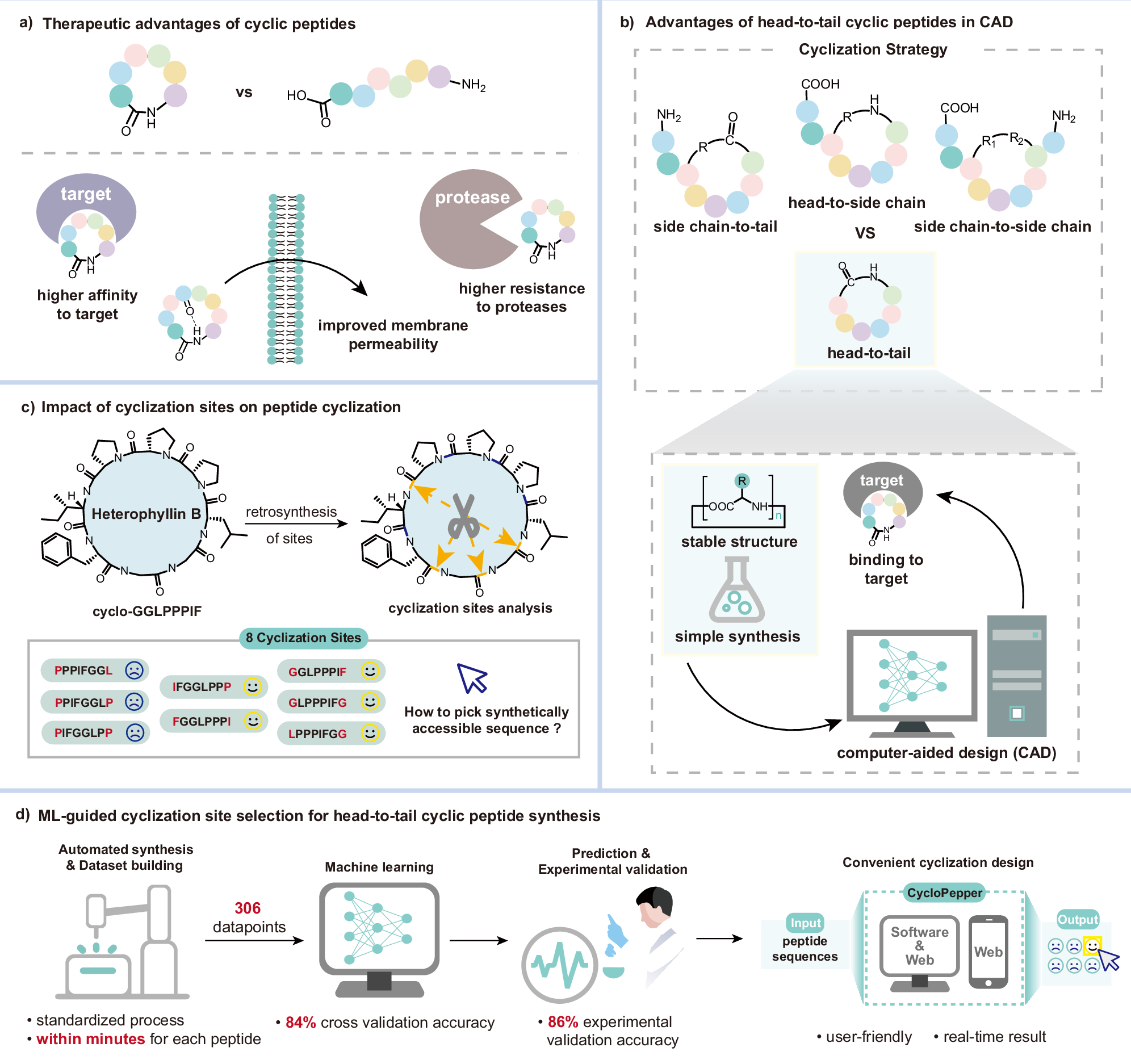
Cyclic peptides have long attracted attention in drug discovery because their ring-shaped structures can improve stability, permeability, and target binding. But making them is often the hard part. In particular, head-to-tail cyclization on solid support can be highly sequence dependent, and choosing the wrong disconnection site can mean low yields or failed closure.
A new study introduces CycloPepper, a machine-learning platform designed to predict cyclization outcomes and guide synthesis planning for therapeutic cyclopeptides. The system was trained on a standardized set of 306 cyclic peptides ranging from 2 to 14 residues, generated using an automated synthesis workflow called CycloBot. According to the authors, the model reached an average prediction accuracy of 84%.
To test whether the predictions held up in practice, the team evaluated the platform against 74 randomly selected and therapeutically relevant peptides, reporting 86% consistency between predicted and observed outcomes. That validation step matters because cyclization is notoriously sensitive to local sequence features, steric effects, and the conformational preferences of the peptide backbone.
What makes CycloPepper especially useful is its focus on a practical bottleneck in peptide chemistry: selecting the best cyclization site before committing time and materials to synthesis. Rather than relying only on trial-and-error or expert intuition, researchers can use the platform through a web interface or software tool to assess candidate ring-closure strategies more quickly.
The authors also highlight examples involving disease-targeting peptides, including sequences relevant to cancer biomarkers, where the platform helped identify viable cyclization sites. That kind of application points to a broader goal: making cyclic peptide discovery faster, more reproducible, and more accessible for therapeutic programs.
As peptide therapeutics continue to move from concept to clinic, tools like CycloPepper suggest that machine learning may become an important partner to automation in the lab. If successful, that combination could help researchers spend less time troubleshooting synthesis and more time advancing promising cyclic peptide candidates.