
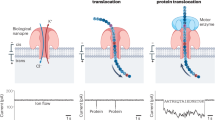
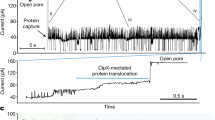
Nanopore sensing has long been pitched as a path toward single-molecule proteomics, but practical hurdles have slowed progress: messy signals, limited throughput, and sample prep that is often too cumbersome for routine use. A new study in Nature Communications aims to address those bottlenecks with a massively parallel platform built specifically for peptide profiling and protein identification.
The key idea is straightforward: simplify the way peptide libraries are prepared, then use artificial intelligence to extract meaning from the huge volume of stochastic events produced by the nanopores. Instead of treating the signal as noise, the workflow learns the statistical features that distinguish one peptide from another and converts those patterns into reliable fingerprints.
According to the authors, this approach improves peptide discrimination while also supporting protein-level identification. In blinded testing, the system was able to identify multiple proteins from complex enzymatic digests, suggesting that the method is not just useful in controlled demonstrations but can handle realistic proteomics samples.
The platform was also applied to antibody validation, where it supported epitope screening and semi-quantitative affinity assessment. That makes the work interesting not only for sequencing-style proteomics, but also for assay development and biotherapeutic characterization.
For the field more broadly, the advance is less about a single sensor and more about an end-to-end workflow: native protein or peptide modification, parallel nanopore measurement, and AI-assisted interpretation. The study also comes with deposited data and open-source code, which should help others test and adapt the method.
If nanopore proteomics is going to move from a promising concept to a practical tool, platforms like this may be the template: fast to prepare, scalable to large datasets, and smart enough to make sense of the noise.