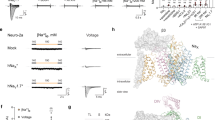
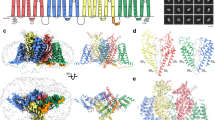
Researchers have mapped, in atomic detail, how two naturally occurring animal toxins cripple an insect sodium channel while sparing the mammalian equivalent. Using cryo-electron microscopy, the team solved structures of the insect sodium channel NavPaS bound to Av3, a peptide toxin from a sea anemone, and LqhαIT, a scorpion toxin known for insect-selective activity.
Although the two toxins attach differently, both act on voltage-sensing domain 4 and interfere with fast inactivation by holding the S4 segment in a deactivated state. Av3 uses a membrane-embedded pocket at the interface between VSD4 and the first pore domain, while LqhαIT binds the more familiar neurotoxin site 3. The result is the same: the channel is trapped in a nonfunctional state that disrupts electrical signaling in insects.
The study helps explain why these peptides are selective for insect channels and less active on mammalian sodium channels. That selectivity matters for pest control, where the goal is to kill target insects without creating unnecessary risk to other animals.
Beyond mechanism, the work also points to a practical design strategy. By feeding structural information into AI-driven protein design tools, the researchers created an improved LqhαIT variant with roughly double the insecticidal potency in bioassays. In other words, the structure did not just explain a natural toxin — it helped guide the creation of a stronger one.
Together, these findings highlight a growing intersection between structural biology, toxin evolution, and computational protein engineering. For biopesticide development, that combination could speed the search for peptide-based agents that are both highly effective and highly selective.