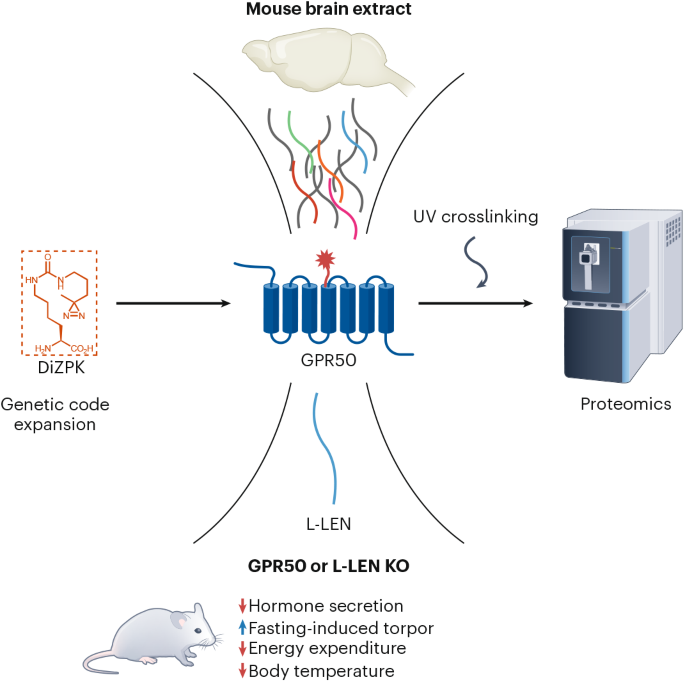
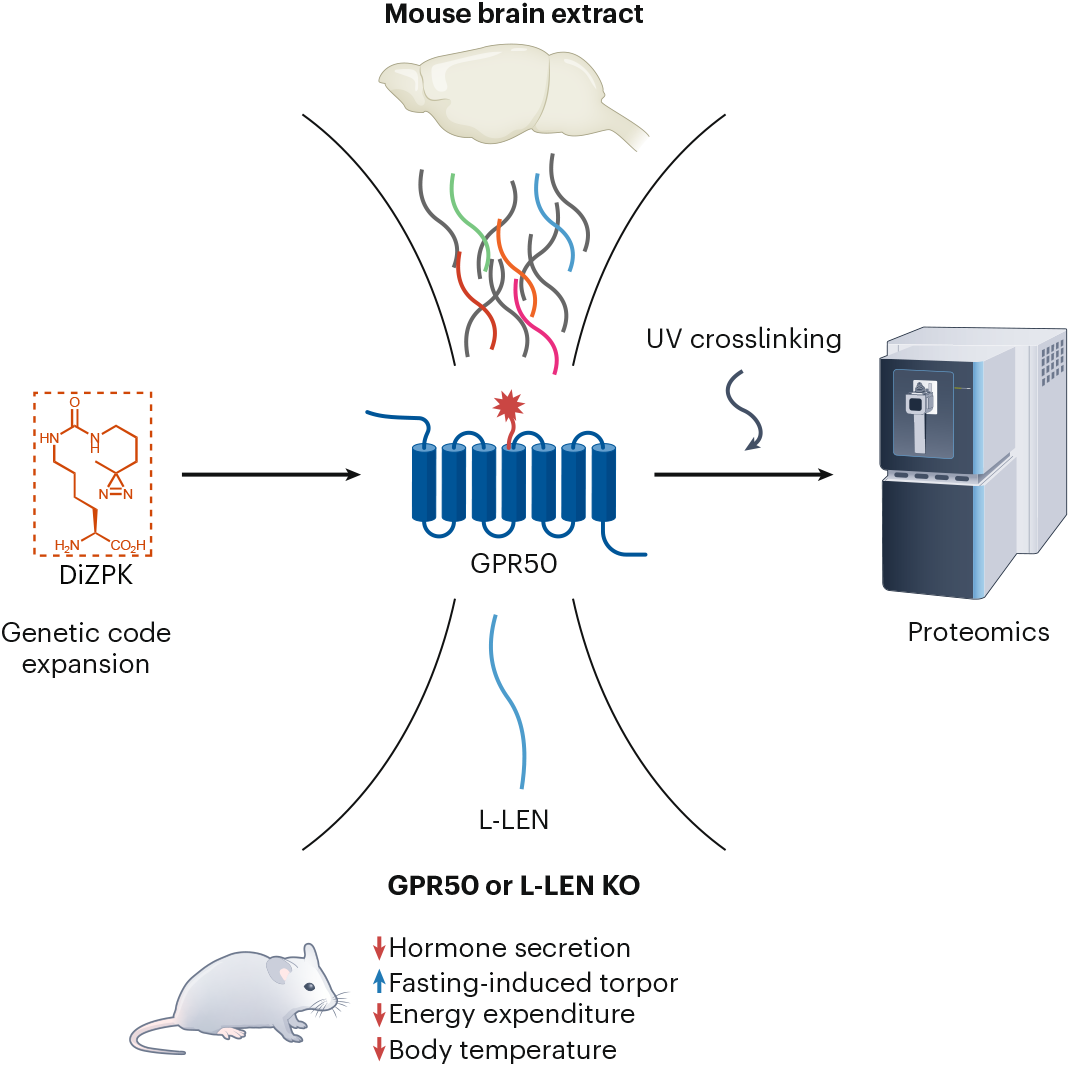
Orphan G protein-coupled receptors remain one of the most challenging classes of signaling proteins to study because their natural ligands are unknown. A new method described in Nature Chemical Biology offers a way to tackle that problem by using site-specific UV-mediated crosslinking to trap receptor-ligand interactions long enough to identify them.
Using this approach, researchers identified the neuropeptide Little-LEN as an agonist for GPR50, an orphan GPCR. The finding adds a missing piece to the biology of a receptor previously lacking a defined endogenous partner and suggests a role in tuning energy expenditure according to metabolic state.
Why orphan GPCRs matter
GPCRs are central to cell communication and are major drug targets, but orphan receptors have no assigned natural ligand, making them difficult to place in physiology. Finding those ligands can uncover new signaling pathways and open the door to therapeutic targeting.
How UV crosslinking helps
The key advance is the use of a light-triggered, site-specific crosslinking strategy. In practice, this means a ligand can be positioned so that, when exposed to UV light, it forms a covalent link with its receptor at the contact site. That stable capture makes it easier to pull down and identify the interaction.
Compared with conventional screening approaches, this kind of chemical trapping can be especially useful for transient or low-affinity interactions that might otherwise escape detection.
A peptide clue to metabolic regulation
The identification of Little-LEN as a GPR50 agonist is notable not only because it de-orphans a receptor, but also because it connects the receptor to peptide signaling in metabolism. The reported relationship between GPR50 and energy expenditure suggests the receptor may help organisms adapt their energy use to nutritional state.
For peptide researchers, the result is a reminder that small endogenous peptides can still hide in plain sight, waiting for better tools to expose their targets. For GPCR biology, it is another example of how modern chemical methods can turn an orphan receptor into a defined signaling pathway.
What comes next
Methods like this could accelerate ligand discovery across the orphan GPCR family, especially where traditional deconvolution strategies have stalled. As more receptors are matched with their native ligands, the field should gain a clearer view of how peptide signals shape physiology, metabolism, and disease.