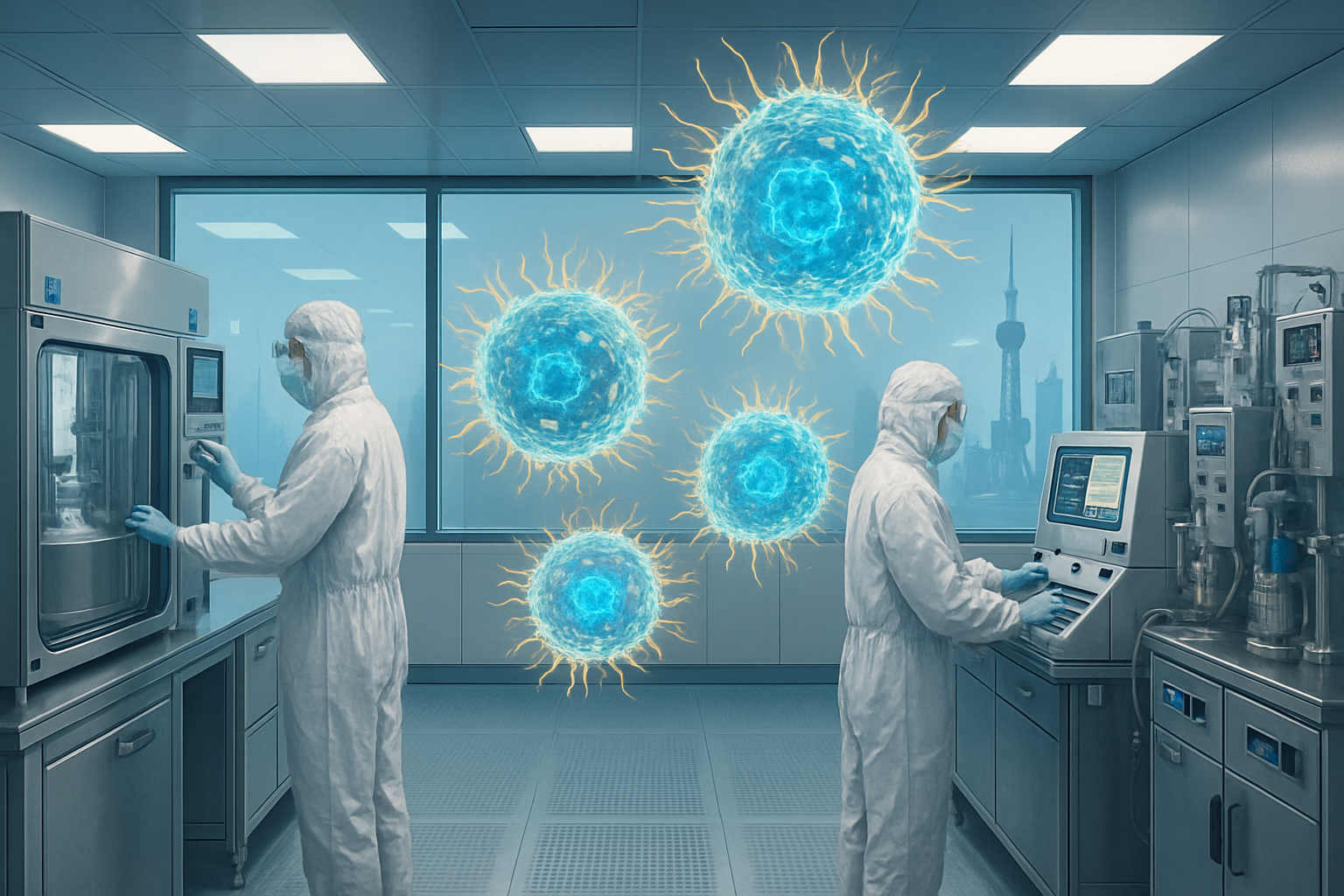
AstraZeneca is taking a major step toward building a full cell therapy footprint in China, announcing plans for a commercial manufacturing base in Shanghai’s free trade zone. The site is intended to supply CAR-T therapies for China and additional Asian markets, supporting the company’s push to become a leading global player in end-to-end cell therapy development and production.
The move follows AstraZeneca’s broader commitment to invest more than $15 billion in China by 2030. That pledge includes expanding capabilities across advanced therapies, and the Shanghai facility now adds concrete detail to that strategy. Alongside the manufacturing base, the company also plans to open an innovation center in the city to support early research, viral vector and plasmid work, analytical testing, and clinical manufacturing.
One of the central programs tied to the new infrastructure is AZD0120, AstraZeneca’s autologous BCMA/CD19 dual-target CAR-T candidate. The therapy came into the portfolio through the company’s acquisition of Gracell Biotechnologies, and it is now advancing through a global Phase 3 trial in multiple myeloma. AstraZeneca is also studying the platform in autoimmune diseases such as lupus, multiple sclerosis, and rheumatoid arthritis.
Autologous cell therapies come with a demanding logistics chain: patient T cells must be collected, processed, engineered, and returned quickly and reliably. That makes manufacturing capacity a critical factor in whether a program can scale commercially. AstraZeneca appears to be addressing that challenge directly by investing across the supply chain rather than relying on a single production step.
The company’s strategy also reflects lessons from the wider CAR-T field, where manufacturing bottlenecks and supply issues have slowed launches for some developers. By building facilities in Shanghai and deepening its local scientific presence, AstraZeneca is aiming to reduce those risks while strengthening its position in one of the world’s most important biotech markets.
Beyond manufacturing, the company says it is working with partners in China and the U.K. on a collaboration program designed to combine Chinese innovation with global scientific and financial resources. The initiative suggests AstraZeneca is not only building infrastructure, but also trying to create a broader ecosystem around next-generation cell therapies.